

 Tweet
Tweet
I didn't know exactly how to title this because there's more to it than a fancy name. Basically, this is a writeup if you have a 93-96 Camaro and you want to convert the "main bulbs" to LED (IE: The tach, speedo, and gauges, not the secondary "light up icons") Likewise, this may not work with stock gauges, as the stock gauges have a blue plastic backing on them which means red LEDs won't shine through.
Materials Needed:
194 wedge-style Inverted-Cone Wide Angle LEDs [I purchased from Superbrightleds.com]
Taking the gauges out is the most time consuming part of it. You'll have to remove the radio bezel, the knee bolster, the A-pillar, and the dash pad all just to gain access to the bolts to remove the gauge cluster bezel. The bolts are all 10mm as I recall. Once the cluster bezel is removed, there's 4 bolts that hold the cluster in place. Unplug the cluster, and take the gauges to your workbench or kitchen counter. You'll need a small torx tip to remove all the little screws from the black plastic cover that protects the circuit board on the back of the gauge cluster. Once that's removed, the real conversion begins.
Once you have the black plastic cover off, you have perfect access to all the bulbs. These bulbs are meant to be replaced socket and all. Well, you only ordered 194 base LEDs [that's all you need], so here's the trick. Slip on a pair of rubber dish gloves, they'll not only give you extra grip, but protect you from bits of glass. With the gloves on, grib the base of the glass bulb and the plastic socket, and pull them apart. It doesn't take too much to break the bulb loose. Once you have removed the bulb, you now have a perfect socket for a 194 wedge bulb. Take your LED and bend the leads on them so they point down, instead of being against the base as they come. With the leads pointed down, insert the 194 wedge LED into the socket. Bend the leads to make contact with the metal strips on the sides of the socket. You'll need a soldering iron and solder to ensure a strong, secure connection between the lead and the metal. I tried just bending it, but that wasn't enough when I tested it.
Once your bulbs are soldered into place, simply plug them back in and go out to your car and test. Make sure you test first, before putting the black cover back on. The bulbs are polarized, so if a bulb doesn't turn on when you test the lights, twist the socket back out from the gauges and turn the socket 180 degrees and then try it again and it should light up. If not, check your solder joints. If everything lights up ok, then you've just gotten a great new LED-lit gauge cluster! Put it all back together and enjoy the new lights.
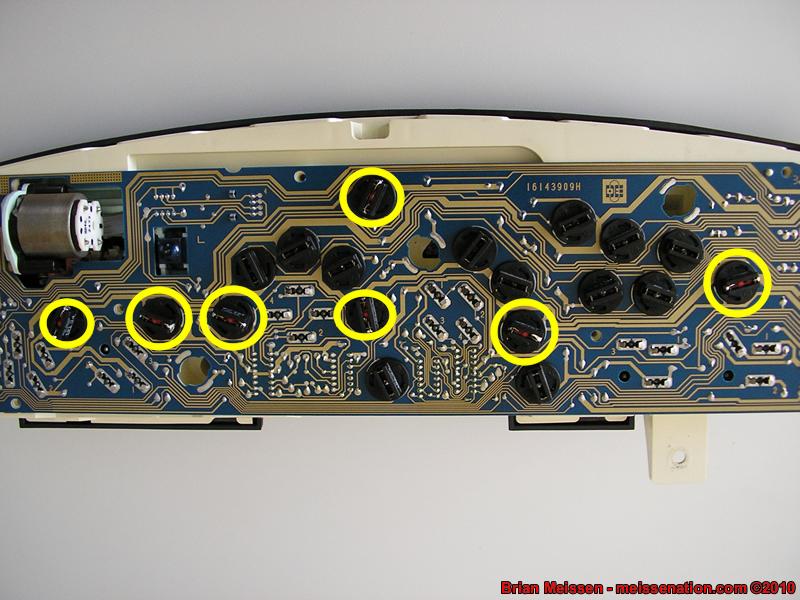
Bulbs to replace with the 194 wedge LEDs:
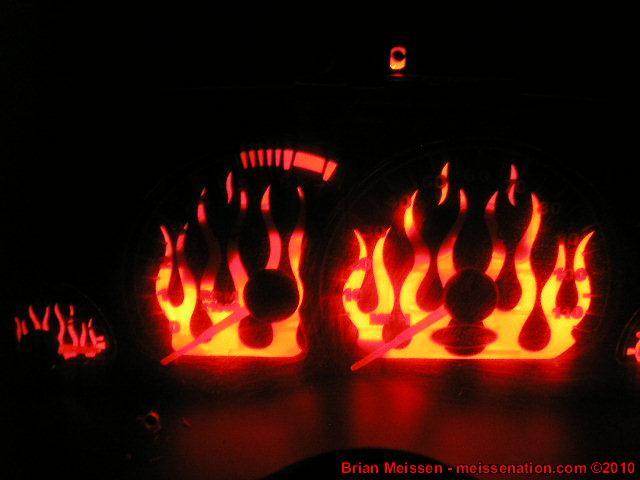
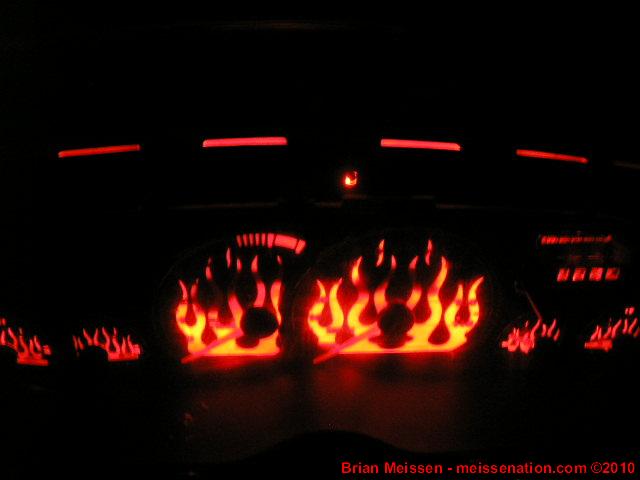
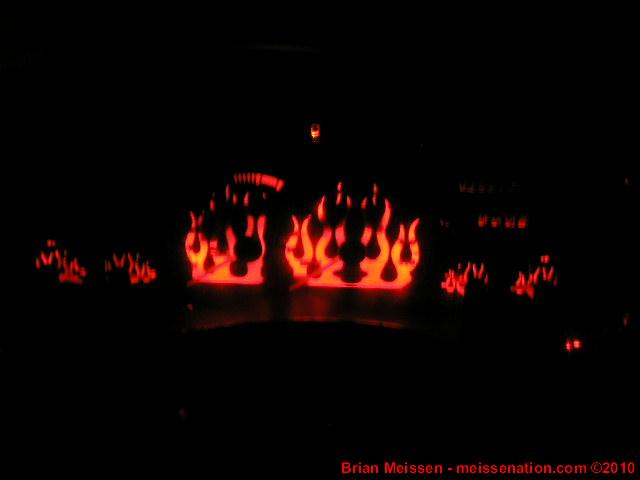
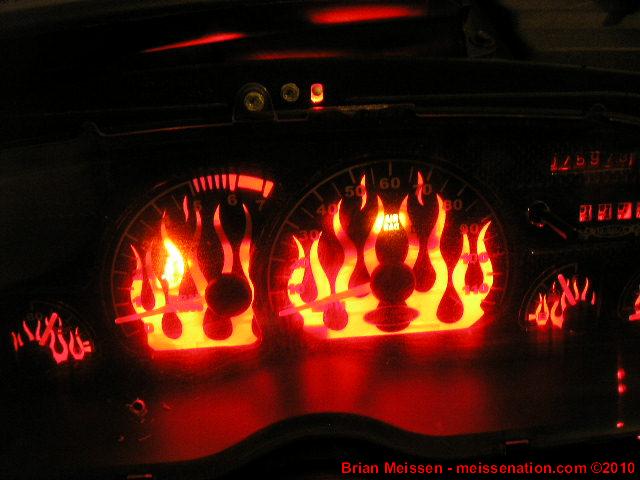
The results:






Materials Needed:
194 wedge-style Inverted-Cone Wide Angle LEDs [I purchased from Superbrightleds.com]
Taking the gauges out is the most time consuming part of it. You'll have to remove the radio bezel, the knee bolster, the A-pillar, and the dash pad all just to gain access to the bolts to remove the gauge cluster bezel. The bolts are all 10mm as I recall. Once the cluster bezel is removed, there's 4 bolts that hold the cluster in place. Unplug the cluster, and take the gauges to your workbench or kitchen counter. You'll need a small torx tip to remove all the little screws from the black plastic cover that protects the circuit board on the back of the gauge cluster. Once that's removed, the real conversion begins.
Once you have the black plastic cover off, you have perfect access to all the bulbs. These bulbs are meant to be replaced socket and all. Well, you only ordered 194 base LEDs [that's all you need], so here's the trick. Slip on a pair of rubber dish gloves, they'll not only give you extra grip, but protect you from bits of glass. With the gloves on, grib the base of the glass bulb and the plastic socket, and pull them apart. It doesn't take too much to break the bulb loose. Once you have removed the bulb, you now have a perfect socket for a 194 wedge bulb.
Take your LED and bend the leads on them so they point down, instead of being against the base as they come. With the leads pointed down, insert the 194 wedge LED into the socket. Bend the leads to make contact with the metal strips on the sides of the socket. You'll need a soldering iron and solder to ensure a strong, secure connection between the lead and the metal. I tried just bending it, but that wasn't enough when I tested it. Once your bulbs are soldered into place, simply plug them back in and go out to your car and test. Make sure you test first, before putting the black cover back on. The bulbs are polarized, so if a bulb doesn't turn on when you test the lights, twist the socket back out from the gauges and turn the socket 180 degrees and then try it again and it should light up. If not, check your solder joints. If everything lights up ok, then you've just gotten a great new LED-lit gauge cluster! Put it all back together and enjoy the new lights.
Bulbs to replace with the 194 wedge LEDs:
The results:

 357ci LT1, cammed, stalled, and driven.


 cool transformation






Comment